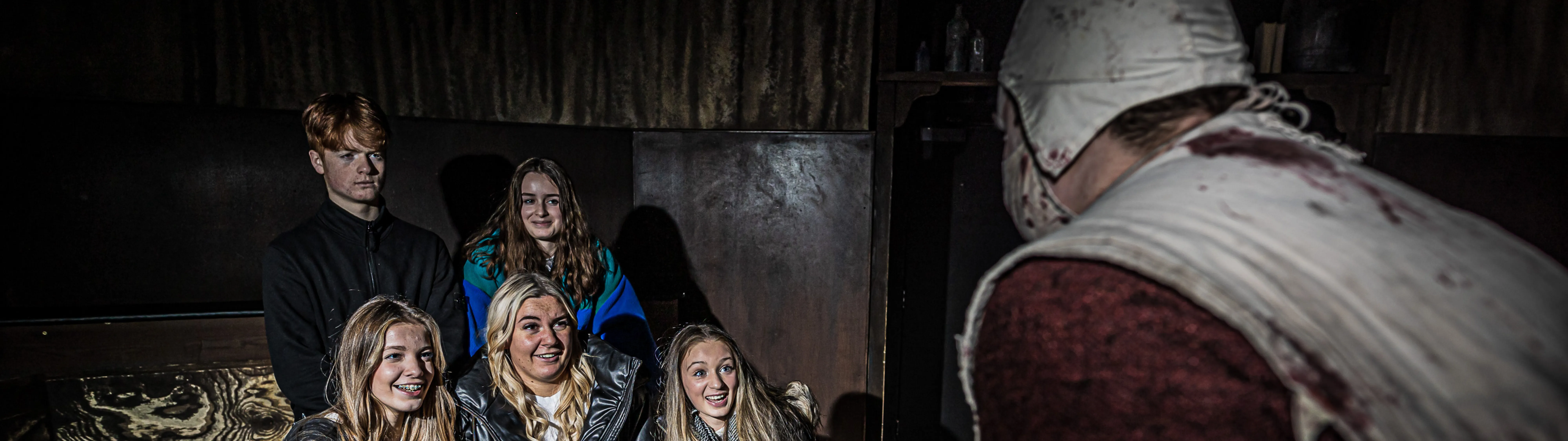
Black John
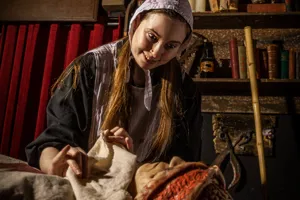
Quickly, there's noBODY in this room...
You will find yourself in the anatomic theatre of Doctor Deyman. In his theatre lies the corpse of Black John, an infamous criminal of his time.
This scene will be immortalised in a painting by the famous painter Rembrandt van Rijn. However, the cleaner, who is there to clean the theater in preparation for Rembrandt’s painting-session, discovers something quite shocking.
Buy Now
Historical background
In the second half of the sixteenth century, Amsterdam’s population grew rapidly and the city expanded. Prosperity increased, and understanding and knowledge in every field advanced. ‘Theatrum Anatomicum’, where practical instruction in anatomy was given by renowned teachers such as Nicolaas Tulp (depicted in the painting hanging on set). Whilst doctors derived their knowledge from books and merely diagnosed patients and referred them where necessary, the surgeon was someone who gained his knowledge from practical experience.
Surgeons (healers) were trained by working for a number of years as apprentices or assistants in a surgeon’s shop under the supervision of a master. In addition to his barbering duties, the master performed bloodletting, treated wounds and abscesses, and was skilled in setting broken bones and carrying out surgical procedures.
From 1611 onwards, anatomy lessons were held on the upper floor of the Waag (on what is now Nieuwmarkt). In the 17th and 18th centuries, anatomy lessons (dissections) were carried out in the Theatrum Anatomicum, often captured in group portraits.
Dissections took place only in winter to slow down the process of decomposition. Once or twice a year, they were open to the public and could be attended by anyone.
JORIS FONTEIJN
The Flemish Joris Fonteijn (also known colloquially as ‘Zwarte Jan’) was a tailor by trade. Fonteijn was caught in December 1655 whilst breaking into a house on the Nieuwedijk. During his interrogation (torture), he confessed to countless crimes in various towns. To put a stop to this repeat offender, he was sentenced to death on 28 January 1656. Shortly after his execution, Fonteijn was granted to the Surgeons’ Guild by the lords of the court to serve as a ‘subjectum anatomicum’. The demonstration was carried out by Dr Johan Deijman. Anyone could attend such a demonstration upon payment of an admission fee. Deijman gave three sessions, which raised over 187 guilders in admission fees. Deijman’s first demonstration has become famous thanks to a painting by Rembrandt.


